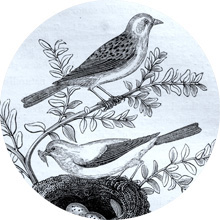

While the primary focus of this blog is the London Fancy and the Lizard canary, my research often overlaps with the history of other varieties that became established during the 19th century. They are the canary breeds that we now call the ‘old varieties’. The problem with this description is there is no widely accepted definition as to what constitutes ‘old’. I have my own benchmark: if a variety is described in Blakston’s magnum opus “The Illustrated Book of Canaries and Cage Birds” (1877-81) then it is old.
They fall into three distinct groups: birds bred for the pattern of their plumage (the Lizard and London Fancy); type canaries that have a long history, but have changed so much that they no longer exist in their original form (the Norwich, crested Norwich, cinnamon Norwich and Yorkshire); and three very distinctive breeds that remain true to the standards described and illustrated by Blakston (the Belgian, the Scots Fancy, and the Lancashire canary). It is this last group that I regard as the ‘old varieties’, and which will feature in a forthcoming series.
The series has been a long time in the making. It started in 2020 when Gust Truyens, a fellow student of canary history from Belgium, introduced me to several Dutch and Belgian sources that ranged from canary imports in the 17th century to canary shows in the 19th. They cast new light on canary culture in Belgium which, contrary to my expectations, was clearly more advanced than in Britain during the first half of the 19th century. As my research progressed, it became evident that the rapid development of the canary fancy in Britain during the second half of the century was founded on ideas and bloodstock imported from Belgium.
Thus what started as a short series on the history of the Belgian canary expanded to include the origins of the old varieties. It is a wide ranging study of the people and events that brought such distinctive breeds into being. It also reveals some surprising discoveries that contradict old theories and require new explanations of how and why things happened. The old varieties have a strong connection with Belgium and its canaries, but not always in the way you might assume.
The series now comprises seven chapters and will be published at (mostly) two week intervals starting on 4 January.
Huw Evans
Sounds great Huw. Very much looking forward to this series.
I’m interested to know why you thought Belgium was not as advanced as the UK in canary breeding.
On the contrary Donald, Belgium was clearly more advanced in the first half of the 19th century, and I’ve said so in my introduction.
I agree Huw,
but I guess Donald’s question is why you at first thought the UK was more advanced.
If that’s the case, I’m happy to clarify. I had no reason to believe that one country was more advanced than the other, until the evidence told me otherwise.
Looking forward to the series Huw, there is a few breeders of the Belgian in Scotland, I only know if 1 Lancashire breeder, Robert Clarke from Strathaven still has a small stud, a great shame as they are lovely birds
Alex